Picture books are a great way for kids to learn basic concepts about sound, such as the difference between loud and quiet, how to be a good listener, and when an “indoor voice” or “outdoor voice” is appropriate. Here are some of my favorites.
Books for Toddlers: Quiet, Loud, and Listening
- The Loud Book by Deborah Underwood explores the opposite, such as “thunderstorm loud” and “candy wrapper loud!”. It’s a quick read that can pair with The Quiet Book or read on its own.
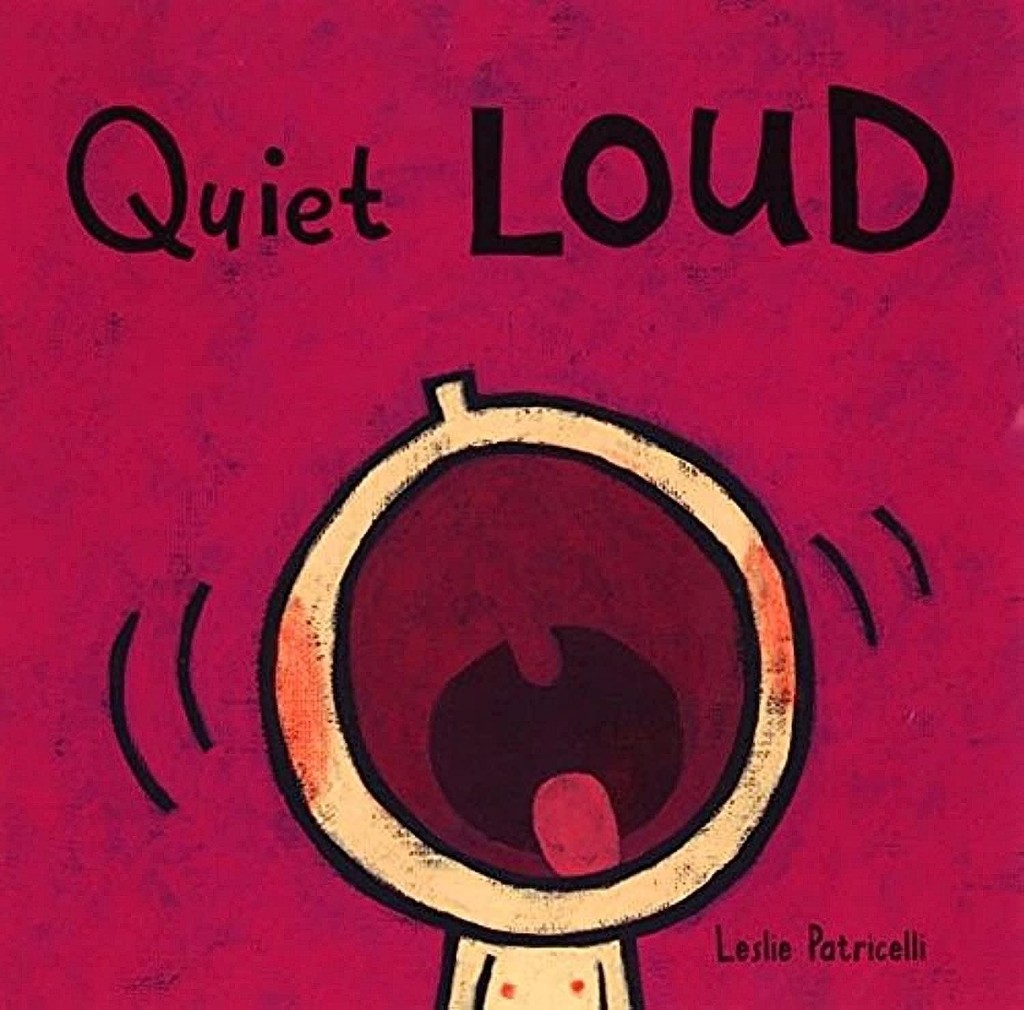
- Quiet Loud by Leslie Patricelli is part of her popular series for toddlers that explain opposites. In Quiet Loud, each page has funny and playful examples, such as “crayons are quiet” and “pots and pans are LOUD.”
- The Quiet Book by Deborah Underwood explores different situations that call for a quiet voice, such as “swimming underwater quiet” and “sleeping sister quiet.” The graphics are cute, detailed, and calming. This is be a great book for settling down before bed or nap.
- Voices Are Not for Yelling by Elizabeth Verdick teaches a difference between an indoor voice and outdoor voice, and how yelling can hurt other’s ears. This is part of her fantastic “Best Behavior” series, which includes Hands Are Not for Hitting and Teeth Are Not for Biting.
- Listening Time by Elizabeth Verdick is another book from the behavior-driven series above. The goal is to help prepare toddlers good listening skills. This would be great for a classroom.
Books for Toddlers: Environmental Sounds
In language development, “environmental sounds” are verbal sounds that imitate another sound. These sounds often come before words – such as saying “vroom” versus car or “moo” instead of cow. They are an important part of early language development but also can be a fun and silly way to communicate.
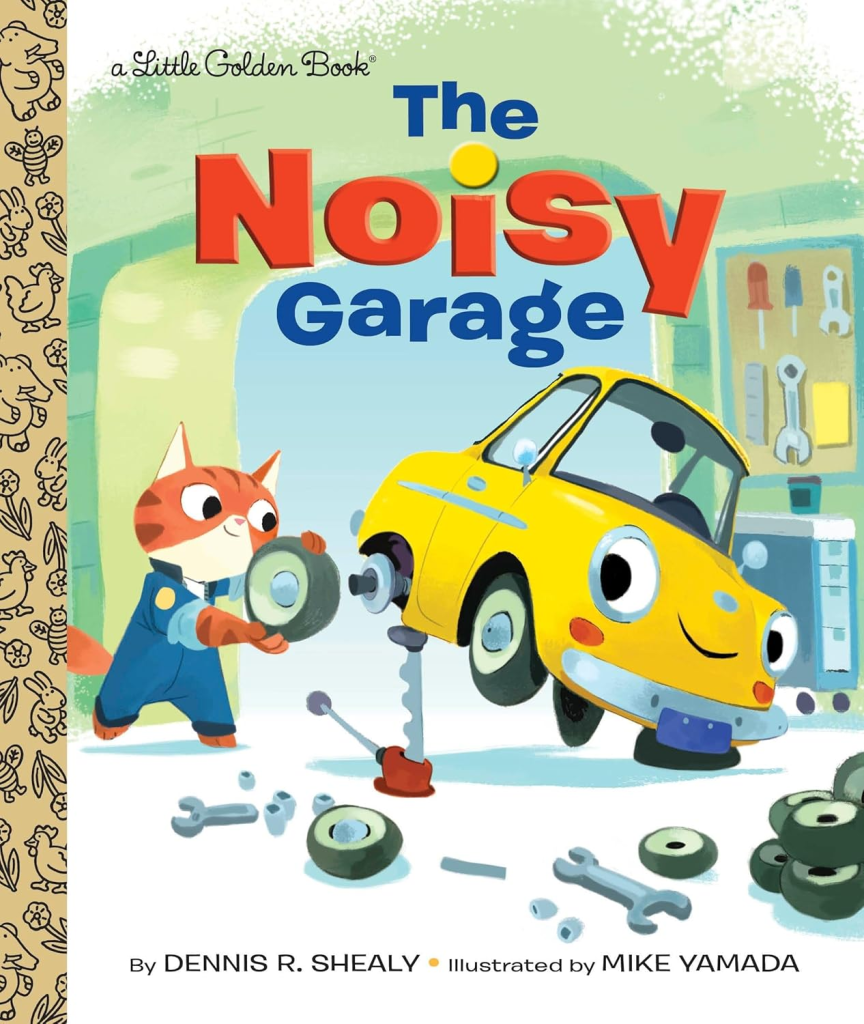
- The Noisy Garage by Dennis R. Shealy is a really cute Little Golden Book about all the sounds a car make. For a child who’s more interested in cars than animals, this would be a great book to get them interested in environmental sounds.
- Mr Brown Can Moo! Can You? by Dr. Seuss is a classic short book about environmental sounds. Water drips and drops, clocks go tick tock. The board book version is compact and is available in many languages.
- Squeak, Rumble, Whomp! Whomp! Whomp!: A Sonic Adventure by Wynton Marsalis blends his upbringing in New Orleans with his life as a professional musician. His book covers all the sounds in a neighborhood from a squeaky door, a noisy mouse, and instruments like drums and a trumpet.
- Polar Bear, Polar Bear, What Do you Hear? by Bill Martin Jr. & Eric Carle covers the sounds of farm animals and as well as hippos, peacocks, and zebras. You could easily turn this book into a game of “what do you hear?”
- The Ear Book by Al Perkins is part of the Bright & Early Board Books series, which are a board book collection of Dr. Seuss stories. It’s full of environmental sounds.
Books for Younger Kids
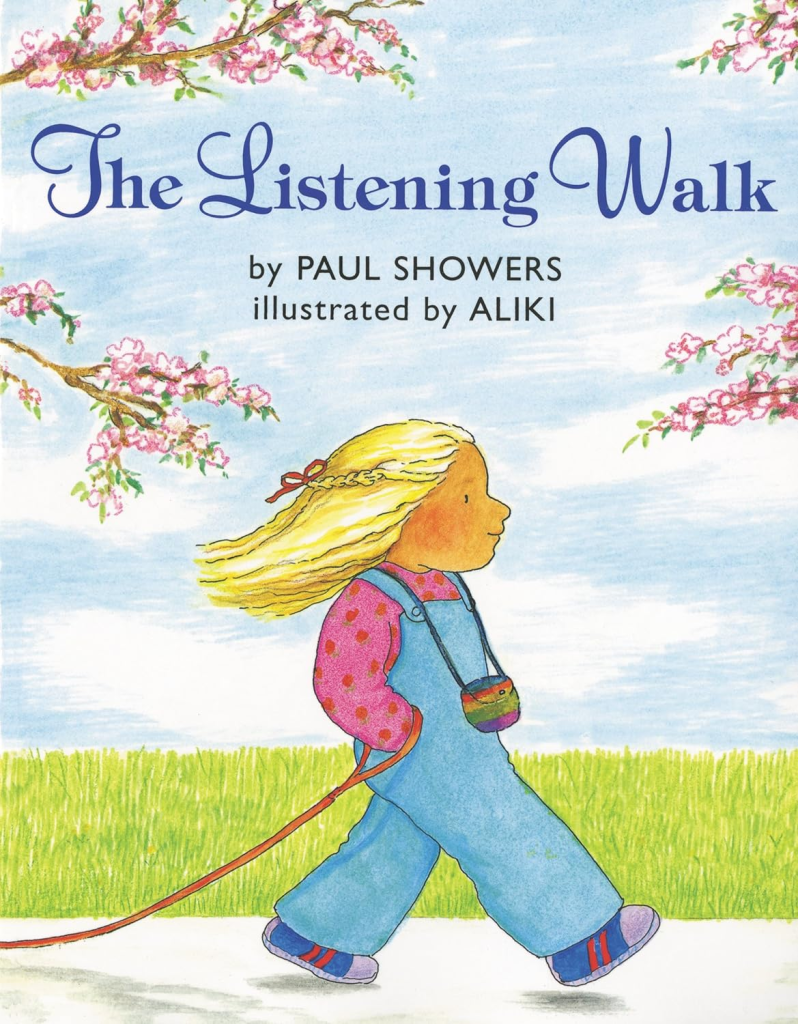
- The Listening Walk by Paul Showers is one of my favorites because it is all about an activity involving sound. A young girl goes on a “listening walk” with her dad (and dog) and talks about all the sounds she hears. It’s an activity you can then do, too. (Ages 3-7)
- Oscar and the Bat: A Book About Sound by Geoff Waring weaves concepts about sound with a cute story about Oscar the Cat and a knowledgeable bat. I like this book because it’s first and foremost a story with adorable illustrations, it also includes ideas for discussion about sound at the back of the book. (Ages 4-8)
Science-Driven Books
- Decibella and her 6-Inch Voice by Julia Cook is about Decibella, who loves to use her voice but her loudness gets her in trouble. Her teacher shows her five voices: Whisper, 6-inch, Table Talk, Strong Speaker, and Outside. I like this book because it teaches listening, thinking about what you hear, and learning to control of the voice. This book could be used as an introduction to Decibels, which is the measured level of sound. (Ages 5-10)
- Ears Are For Hearing by Paul Showers explains the parts of the ear and how sound and hearing works. It ucovers the science but also relates to kids in a way they can understand like, “If any sound hurts your ears – like the screech of a police-car siren or fire engine passing by – don’t be embarrassed to put your hands over your ears.”
- Sounds All Around by Wendy Pfeffer is from the “Let’s Read and Find Out” series (stage 1). It covers a lot of topics like how sound waves travel, how to measure sounds, and how people use sound to communicate messages. There’s activities and ideas for further learning.
The books listed here are a starting point. Sound – and especially environmental sounds – are a very common theme in early childhood reading.
When you begin looking for those moments in books, you start noticing them everywhere else, too. The page becomes practice for the world outside it.