When we talk about sound-related games for young kids, we tend to think of their hands. What can they touch, shake, or rattle to create sounds? Toddlers love to walk, kick, stomp, run and jump, too – all of which make noise. In reality, toddlers and young kids may notice the sound of their feet on the ground more than people much taller than them. Why is this? Sound reaches their ears first due to height.
This is a toddler sensory activity that is also good to encourage language development. It is extremely easy to do and it’s just how it sounds: Find things to stomp on. What you’re looking for is sounds that are different, unique, or out of the ordinary (including loud, which is a favorite for some toddlers!)
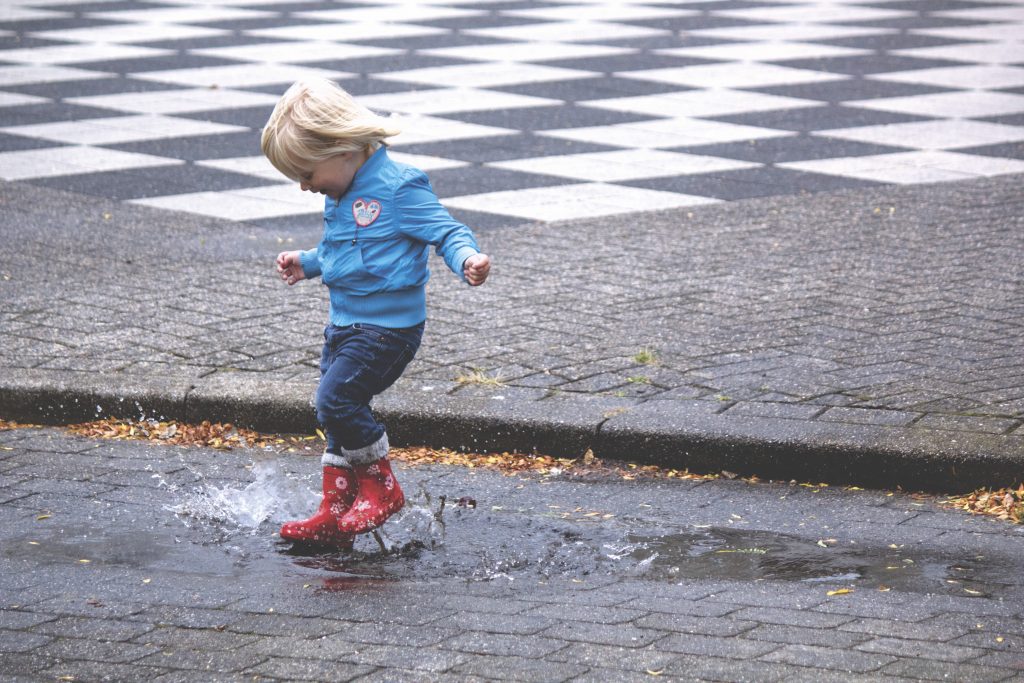
Items to Stomp On
- Concrete, leaves, grass, water (especially on concrete)
- Hollow objects like stairs, floors, decks
- Metal structures like bleachers or a jungle gym, if safe
- Bubble wrap taped to the floor (this was a favorite in our house)
- Crumpled up paper (be cautious of slipping)
This activity is also a great opportunity for building language. Ask questions such as: What do you hear? What does it sound like? Here’s some vocabulary to describe what you’re hearing:
- Loud, big, soft, quiet
- Boomy, big, hollow, thin
- low, high, squeaky
- bright, crispy, crunchy, rattling
You can also use play words to imitate. Toddlers love using “environmental sounds” and they also help with language development. For example:
boom, kaboom, thud, crash, bang, pound, pop
whoosh, vroom, shooo, sss, pah, tink
It can take some creativity to hold a toddler’s attention. After a sound is present for a while, we don’t really notice it anymore because our ear adapts to it being there. That’s why squeaky shoes might be the most interesting thing in the world to a toddler – for the first three minutes. To really catch a toddler’s ear, you have to think like a toddler. What sounds are around them right now that they don’t notice?
Fun fact for adults (who don’t work in audio): There is a field in the sound industry called Foley. A Foley stage has small areas of different surfaces such as tile, concrete, hardwood, hollow wood, gravel/dirt, grass (recreated using cassette tape). A Foley “walker” will watch a scene to see what surface the actor is walking on and also what kind of shoe. There’s a lot of nuance to it – a sneaker sounds different from a dress shoe or barefoot, for example. Often, this work is so natural in the finished product you may not even notice it.
Blog originally on Sound Is Fun!