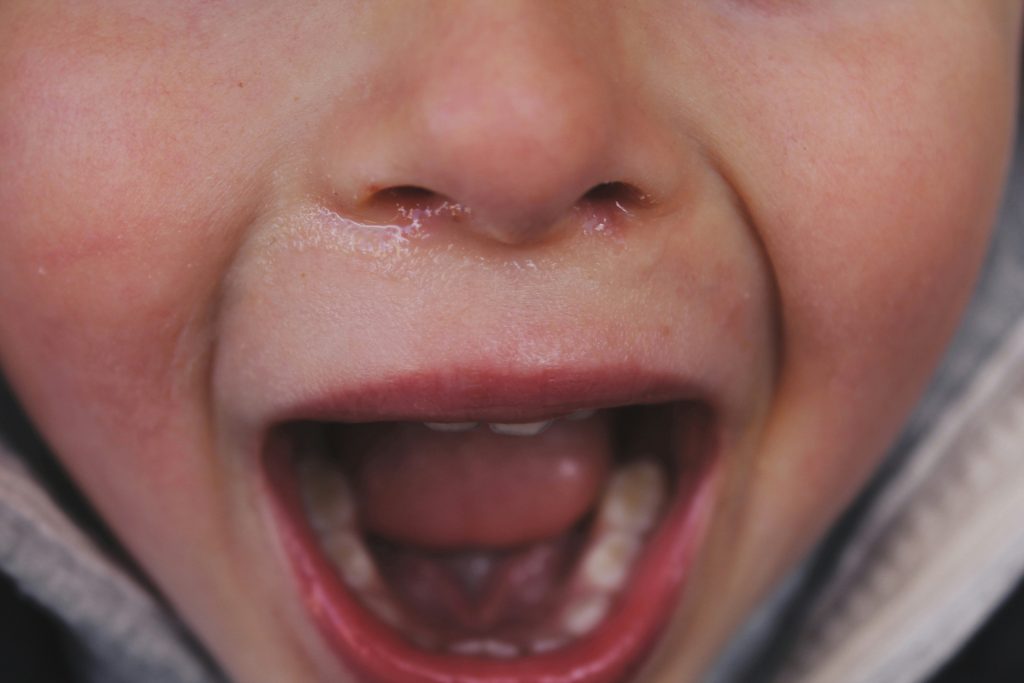
When my son was little, I found myself in a conundrum: how do you comfort a child who is crying or screaming inches from your ears? My watch was sending high-noise alerts, so I knew I needed to learn more. Do caregivers need to think about ear protection?
Why A Cry Cuts Through
The human ear is most sensitive between roughly 2-5 kHz. That’s where our auditory system prioritizes speech and distress signals. The average adult ear canal also resonates around 3 kHz, subtly amplifying around that frequency band. Human screams concentrate energy there. Babies cry in that same range. Many alarms are tuned there as well. It’s also the region most vulnerable to noise-induced hearing loss.
There’s a neurological layer too. Research shows caregivers – especially mothers – demonstrate heightened brain activation in response to infant cries. Attention shifts almost instantly. For mothers with young children, every cry is an emergency, even when the child isn’t yours.
Is There Real Risk?
A baby’s cry can reach 100-110 dB at close range. Prolonged exposure matters, but context is important: most episodes are short, and hearing damage is about accumulated exposure over time, not one event.
Still, when that peak happens repeatedly, inches from the same ear, it becomes part of your daily dose.
Managing Exposure
There are simple ways to protect your ears, including alternating arms and using filtered earplugs during longer soothing sessions. And if the baby is safe – in a crib, bassinet, or with another caregiver – even stepping into another room for 30–60 seconds can significantly reduce peak exposure. Distance alone drops the level quickly, and a wall or closed door further attenuates the higher frequencies where infant cries concentrate energy.
Of course, stepping away isn’t always easy. The wiring that makes a cry hard to ignore is the same wiring that makes it difficult to leave the room. But even small adjustments – holding the baby slightly farther from your ear or switching sides – can reduce load.
Understanding the physiology doesn’t change the experience of parenting. It just explains why the reaction is so immediate – and gives you practical options for protecting your hearing while you’re in it.