This is a reposted blog from Sound Is Fun! written in 2018.
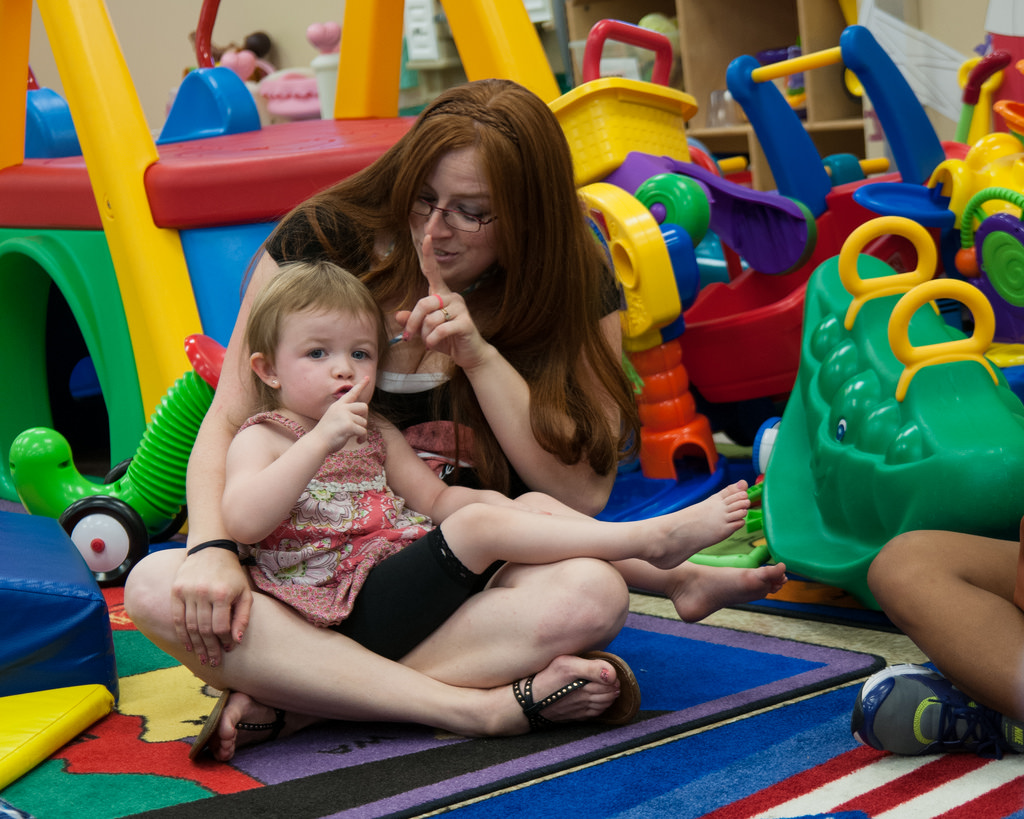
Loud and quiet are basic sound concepts that can be taught to toddlers. Even though we tend to teach these concepts through games, as a parent, I’ve found it to be a functional tool – especially trying to get a toddler to speak quietly when they’re being too loud in public. Here’s the approach I used to teach loud and quiet to my son (who was 23-months old at the time).
Teach Whispering (or Quiet Voice)
Not all toddlers can whisper yet, so this activity can be done with “quiet” voices, too. I find the changing table a good place to do this since it also holds their attention.
- Ask questions in a regular voice then ask another question in a whisper (or low voice). Before my son knew how to whisper, he’d answer my whisper in a regular voice. Once he could whisper, he’d repeat back in the same voice I used.
- Repeating words is good start for this activity. Say in a normal voice, “Can you say ‘cat’?” and let them respond in a normal voice. If you ask in a whisper, “what sound does a dog make?” have them respond in a whispered voice.
- Reinforce what you are doing by saying, “We’re whispering!“, or “We’re talking quietly!”
- Some words are hard to say whispered so you may not always get an answer.
Teaching Loud Voices
- Loud is fairly easy to teach since it’s a matter of imitation (which toddlers love to do). You could ask in a whisper, “Can you whisper?” and keep talking in a whisper until they whisper back. Then, ask loudly, “Can you be loud?” and they’ll probably respond loudly. My son is usually the one switching our conversation between loud and quiet now.
Using Dynamics (Loud and Quiet) With Music
Any repetitive song would work well for this. We sing “The Ants Go Marching” a lot which is perfect for practicing loud and quiet (not to mention it keeps it interesting after singing hundreds of times). After the ants go marching a couple times, we switch to a whisper. He’ll whisper along (like “Hoorah” or “one, two”), but eventually he will switch to being loud. For example, if he says “Hoorah” in full voice, I switch back to singing instead of whispering.
We also use Remo Lollipop Drums and match what our voices are doing. If we are singing or talking loud, we hit the drums loud. If we’re whispering, we hit the drums lightly. Sometimes I also narrate what we’re doing, like “We’re being loud!” or, “We’re being quiet now.”
Using “Shh” For Quiet
I taught the words “whisper” and “quiet” before using “shh”. I did this because “Shh” isn’t a word we use to describe something while it’s happening. It’s more like a command, like saying “stop” or “go”. But, “shh” could be easily added to these activities by saying, “Shh! We’re being quiet”. The hand motion that goes along with “shh” can also be fun for toddlers, too.